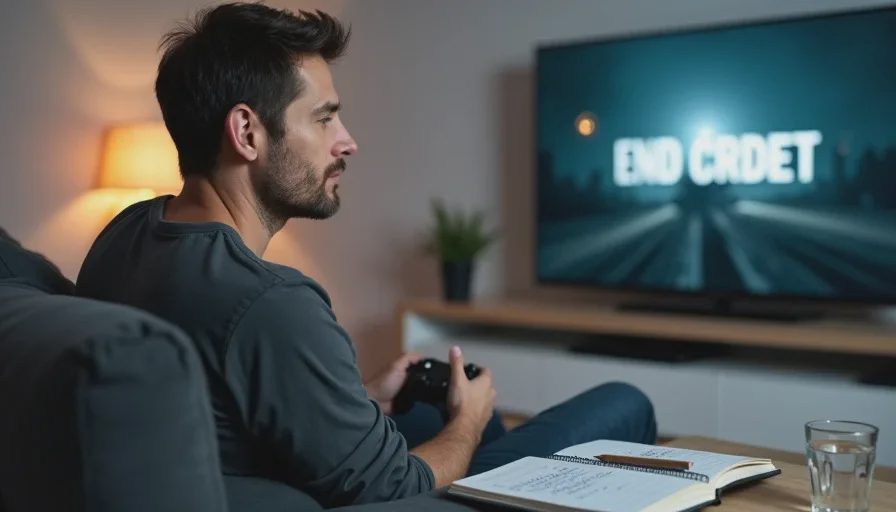
I finished a game last month in a single sitting. It took about ninety minutes. When the credits rolled, I sat there for a while, letting the whole thing settle. The story had come to a proper end. The mechanics had been introduced, explored, and resolved. The emotional arc landed exactly where it needed to. Nothing felt rushed, and nothing felt missing.
That game did something I used to think was impossible. It proved that short games can still feel complete — not truncated, not partial, not "good for its length." Just complete.
The distinction matters more than most players realize. A game can be short without being finished in the emotional sense. And a game can be forty hours long without ever feeling like it resolved anything meaningful. Length and completeness are not the same axis. For a busy adult, the second one is the one that actually determines whether an evening feels well spent.
The Problem With "Short" as a Category
When games coverage talks about short games, it tends to frame them as compromises. The headline says something like "Great Games You Can Beat in a Weekend," and the implicit message is that these are lesser experiences — quicker, smaller, easier to digest, but not quite the real thing. The forty-hour RPG is still the default template for what a "complete" game looks like.
That framing is backwards. Some of the most complete games I've ever played have been short, and some of the most incomplete have been sprawling. A game that knows exactly what it wants to say can say it in four hours. A game that doesn't know what it's about can wander for sixty hours and never land anywhere.
The question isn't how long a game is. The question is whether it finishes what it starts.
What Completeness Actually Feels Like
I've been trying to pin down what "complete" means in practice. It's easier to describe as a feeling than a checklist, but there are a few concrete things that short games do when they earn that sense of closure.
The ending feels inevitable, not arbitrary
A complete game ends because the ending is the logical destination of everything that came before it. Not because the developer ran out of budget. Not because the story needed to wrap up before the credits. But because the whole game was building toward that final moment, and when it arrives, you think: of course that's how it ends.
This is true in short games more often than you'd expect. A game with a tight focus can spend every one of its hours pulling in the same direction. There's no room for side tangents or half-developed subplots. Everything on screen is in service of the conclusion.
The mechanics are explored, not exhausted
There's a difference between a game that introduces a mechanic and one that actually explores it. A complete game introduces ideas, develops them, and reaches a natural conclusion. You feel like you've seen what the mechanic can do — not every possible variation, but the meaningful range of it.
Short games are actually better at this than long ones, because they're forced to be selective. They can't pad their runtime with repetition. Every mechanical idea has to earn its place, and once it's been explored, the game moves on or ends. The result is density: more interesting moments per hour, less filler.
The emotional arc lands
This is the hardest thing to quantify, but it's the most important. A complete game leaves you with a feeling that something has been resolved. Not necessarily happily — some of the most complete games I've played have ended in grief or ambiguity. But there's a sense of having been through something that had a shape: a beginning, a middle, and an end.
Short games have an advantage here too. When the whole experience lasts three hours, the emotional arc stays present in your mind. You can feel the shape of it. In a forty-hour game, the arc gets stretched so thin that individual moments lose their weight. You forget what the beginning felt like by the time you reach the end.

Three Short Games That Get It Right
I want to talk about three games that embody this idea. None of them is longer than four hours. All of them feel complete in ways that put many longer games to shame.
Florence
Florence is about thirty minutes long. It's a love story, told through small interactions: you piece together conversations by fitting puzzle pieces, you scrub a phone screen to scroll through text messages, you pack a suitcase by placing objects in a grid. The mechanics are simple, but they're tied directly to the emotional state of the protagonist. When she's happy, interactions feel fluid and easy. When things fall apart, the same interactions become stiff and resistant.
What makes Florence complete is that it knows exactly what it's about. It's not trying to be a game about love in general. It's a game about one specific relationship, with one specific shape, and it tells that story with total focus. The ending is bittersweet but earned. You finish it in half an hour, and you don't feel shortchanged. You feel like you've been told a story that was exactly as long as it needed to be.
The Gardens Between
The Gardens Between is a puzzle game about two friends and the memories they share. Each level is built around a central mechanic: you control time, moving it forward or backward, while the two characters move through a surreal landscape constructed from their shared past.
The game takes about three hours to finish, and every hour is used well. The puzzles escalate in complexity without ever becoming repetitive. The story is told through environmental detail rather than dialogue, and it builds toward a conclusion that reframes everything you've been doing. When the final scene landed, I sat there for a moment and realized the game had been about something different than I thought — and that realization could only have come from the ending. That's completeness.
Minit
Minit has a simple gimmick: you have sixty seconds to live. Each run lasts a minute, and when the timer ends, you respawn at your starting point with whatever progress you've made — items found, paths unlocked, knowledge gained. The game takes about two hours to finish, and it uses its gimmick perfectly.
What makes Minit complete is that the sixty-second constraint shapes everything. Exploration becomes a series of small, focused expeditions. You learn the world through repetition, each run building on the last. The final sequence, when you finally understand how to use everything you've learned, is one of the most satisfying conclusions I've experienced in a short game. It doesn't end because the content ran out. It ends because you've mastered the loop, and the game knows it.
The Checklist I Use
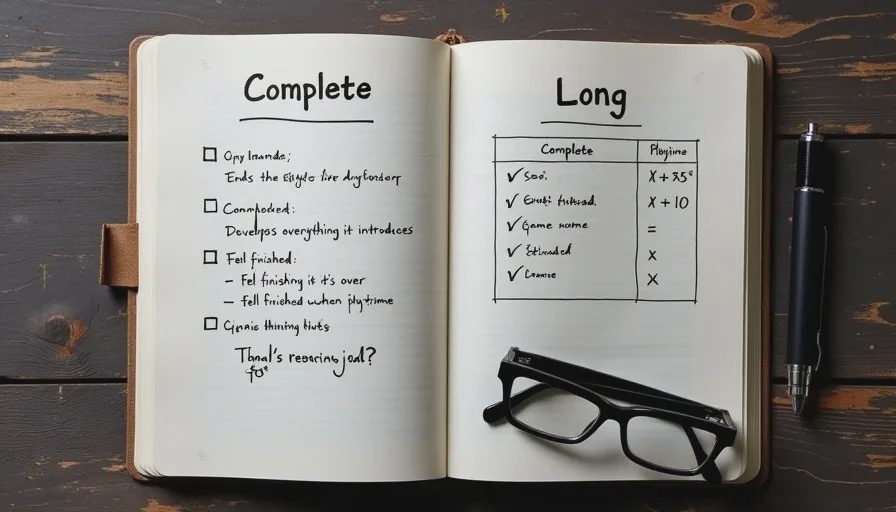
When I evaluate a short game now, I don't ask whether it's worth the price or whether it's "long enough." I ask three questions:
Does it end at the right moment? Some games end too early, some too late. A complete game ends exactly when it should, and you can feel the precision of that timing.
Did it develop everything it introduced? If a game introduces a mechanic, a character, or a story thread, does it follow through? Or does it drop things halfway because the runtime was too short to develop them properly?
Do I feel finished when it's over? This is the ultimate test. When the credits roll, do I feel done? Or do I feel like I've been handed a fragment and told it was the whole?
Most short games fail at least one of these. The ones that pass all three are rare, and they're the ones I recommend without hesitation — not because they're short, but because they're whole.
Why This Matters for Busy Adults
If you're an adult with a job, a partner, and a finite number of evenings, completeness isn't a luxury. It's the whole point. You're not playing games to fill time. You're playing them to have an experience — something that sticks with you after the screen goes dark.
A short game that feels complete delivers that experience more efficiently than almost anything else in the medium. You get the full arc, the full emotional payoff, the full sense of closure — and you still get to bed at a reasonable hour.
The next time someone dismisses a game because it's "only three hours long," ask them one question: did it finish what it started? If the answer is yes, then length was never the issue. Some of the best experiences in this medium are short. They're complete. And they're waiting for you to give them a Tuesday night.





No notes yet — write the first.