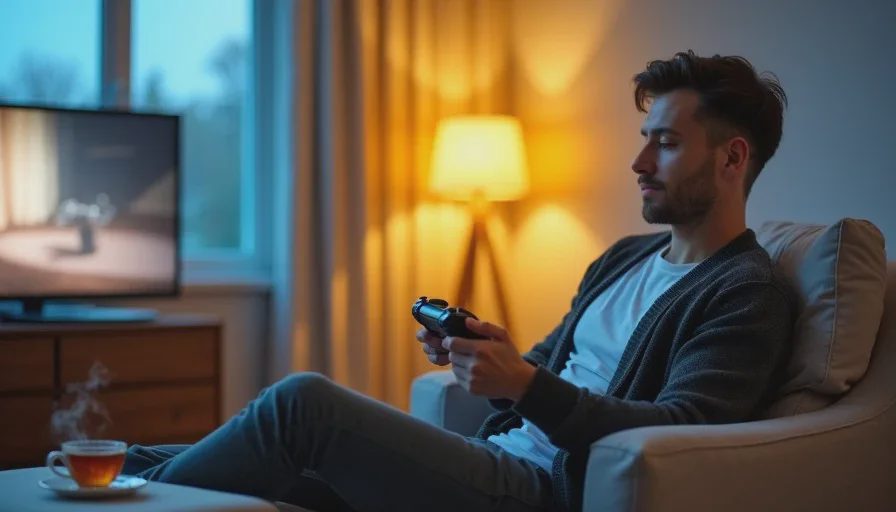
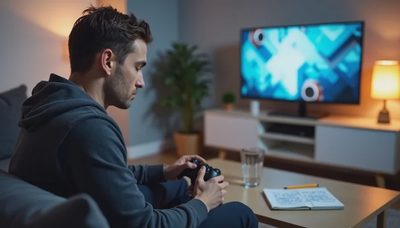
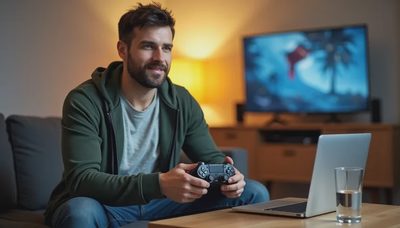
There's a moment after work when you have to decide what to do with the next two hours. Not the big decisions — dinner, errands, whether to call your mother. The smaller one: how to spend the sliver of time that's actually yours. For a lot of us, that sliver involves a screen. And the question is whether the screen is going to give something back or just take more.
I've started asking that question more deliberately. What to play after work if you want to feel better, not busier is not the same as "what to play when you're tired." It's a slightly different problem. Tired is about energy. Feeling busier is about attention — the sense that even your leisure time is being colonized by demands, notifications, systems, and obligations.
Some games leave you feeling like you just did another shift. Some games leave you feeling lighter. I want to talk about the second kind.
Why Some Games Make You Feel Busier
The obvious culprit is games with too many systems. You open them up and suddenly you're managing an inventory, tracking three different progression currencies, checking a map full of icons, and trying to remember which NPC wanted which item. That's not relaxation. That's a second job with better graphics.
But there's a subtler version of this problem, and it took me longer to notice it.
The game demands a specific kind of attention
Some games are relaxing in aesthetic but demanding in practice. They look soft and gentle, but underneath, they're asking you to plan, optimize, or solve. Puzzle games are especially prone to this. A game with calm music and pastel colors can still leave you mentally exhausted if every level requires careful spatial reasoning.
I've made this mistake repeatedly. I'd sit down after a long day, pick a game that looked peaceful, and forty minutes later feel like I'd been doing spreadsheets. The game wasn't bad. It just wasn't addressing the actual problem — which is that after work, my brain wants to shift modes, not just change scenery.
The game has no natural stopping point
Another way games make you feel busier is by refusing to let you go. Not in the manipulative, dark-pattern sense — I'm not talking about games that deliberately exploit psychology. I mean games that simply don't structure themselves around the concept of an ending. You sit down to play for an hour, and two hours later you're still there, not because you're having a great time, but because the game never gave you a reason to stop.
That's the thing about feeling busier. It's not always about what the game asks you to do. Sometimes it's about what the game doesn't do — which is respect the fact that you have a life outside it.
What "Feel Better" Actually Requires
So what does a game need to do to actually help you decompress? I've thought about this a lot, and I keep coming back to three things.
It needs to shift your mental mode
The whole point of after-work gaming is transition. You've been in work mode — alert, responsive, task-oriented — and you need to move into a different state. The best decompression games understand this. They don't just give you something to do. They change the texture of your attention.
That might mean a game with a slow, deliberate pace that forces you to breathe. It might mean a game with a tactile, physical quality that grounds you in your hands instead of your head. It might just mean a game with a clear sense of place, so that playing it feels like going somewhere else for a while.
The specifics matter less than the effect. The question is whether, after twenty minutes, you feel different than you did when you sat down. Not just distracted — different. More like yourself, less like your work self.
It needs to give you a sense of order
This is the part that surprised me. I used to think after-work games needed to be chaotic and mindless — pure sensory input with no structure. But the games that actually make me feel better are often the ones with a clear, simple order to them. A beginning, a middle, an end. A task that you complete. A space that you tidy.
There's something deeply calming about imposing order on a small, manageable world when your real-world responsibilities feel too large to organize. It's the same reason people clean their kitchens when they're stressed. A game that gives you a small, completable task — plant these crops, arrange this room, deliver these packages — offers a kind of closure that real life rarely provides on demand.
It needs to be honest about what it is
The worst after-work games are the ones that pretend to be relaxing but actually demand constant engagement. They lure you in with soft aesthetics and then hit you with complex systems, timers, and fail states. You end up feeling betrayed, which is the opposite of decompression.
The best ones are honest about what they are. They don't pretend to be deep when they're light. They don't hide challenge behind a calm facade. They tell you, through their design, what kind of experience you're signing up for — and then they deliver exactly that.
Three Games That Actually Help
I keep a mental list of games that have genuinely made me feel better after work. Not just games I enjoyed — games that shifted my mood. Here are three that have earned a permanent spot.
1. Unpacking
Why it works: I mentioned Unpacking in an earlier piece, and I'm bringing it back because it's one of the purest examples of decompression gaming I've ever found. You unpack boxes. You place objects. You arrange rooms. That's the whole game.
But the reason Unpacking works so well after work is that it gives you a series of small, completable tasks in a world with no failure, no pressure, and no wrong answers. You're just making a space feel right. The game trusts you to arrange things however you want, and that trust is calming. By the time you finish a level, you've imposed order on a small world, and that order feels good.
2. A Little to the Left
Why it works: A Little to the Left is a game about tidying. You align objects, straighten pictures, organize drawers. The puzzles are gentle, and the game is generous with hints — it wants you to succeed, because the whole point is the satisfaction of things being in their right place.
What makes it perfect for after-work decompression is that it scratches the same itch as cleaning without requiring any actual physical effort. You get the visual and psychological reward of order — the aligned edges, the sorted colors, the neat piles — without having to get up from the couch. It's the game equivalent of looking at a freshly organized shelf and feeling your shoulders drop.
3. Stardew Valley
Why it works: Stardew Valley is a farming sim, and on the surface it might seem like the opposite of decompression. There are crops to water, animals to feed, villagers to befriend, a mine to explore. But here's the thing: none of it is urgent. The game runs on a day-night cycle, and you can spend each day doing as much or as little as you want.
What Stardew Valley gives you is a sense of gentle, sustainable progress. You plant seeds. You water them. They grow. You harvest them. The rhythm is steady and predictable, and it persists regardless of what's happening in your real life. After a chaotic day at work, that predictability is medicine. The game doesn't rush you. It doesn't punish you for playing at your own pace. It just lets you be a person tending a small patch of land, and that's enough.
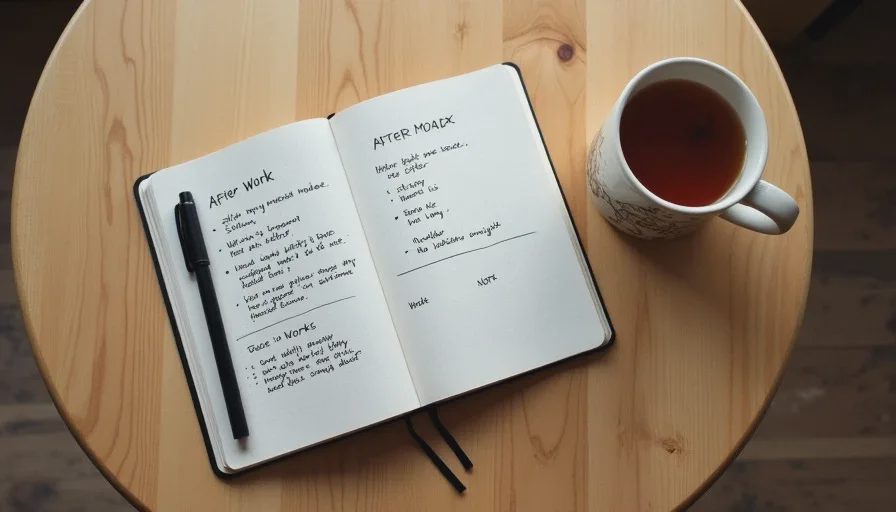
The Trap of Productive Leisure
There's a temptation, when you're a busy adult, to make everything productive. Even your gaming time becomes another thing to optimize — play the right games, make progress, finish what you start. I understand the impulse. But it's the opposite of what after-work gaming should do.
The games that make you feel better, not busier, are the ones that let you be temporarily unproductive. They don't demand that you improve yourself. They don't track your progress toward a goal that matters in the real world. They just give you a small, pleasant space to exist in for an hour, and then they let you go.
That's not wasted time. It's recovery. And in a culture that treats every hour as an opportunity for optimization, recovery is a radical act.
How to Find Your Own After-Work Games
The games that work for you might be different from the ones I've listed. That's fine. The important thing is to identify the qualities that actually help you decompress, and then look for games that have them.
When you sit down after work and open a game, ask yourself: Am I feeling better after twenty minutes, or am I feeling busier? If the answer is the second one, close the game. It's not the right tool for this job.
Pay attention to what your brain is actually asking for. Some evenings it wants order. Some evenings it wants motion. Some evenings it wants to wander through a pretty landscape and not think about anything at all. The more you notice what actually helps, the easier it becomes to find games that deliver it.
And when you find one — a game that genuinely makes you feel lighter after a long day — hold onto it. Those games are rare. They're worth keeping close, for the evenings when the world has been loud and your head needs somewhere quiet to land. A good game doesn't just deserve your Tuesday night. It deserves to help you feel human again when the workday is finally over.

No notes yet — write the first.